About this Blog

During the semester, I shall post course material and students will comment on it. Students are also free to comment on any aspect of the presidency, either current or historical. There are only two major limitations: no coarse language, and no derogatory comments about people at the Claremont Colleges.

Search This Blog

Wednesday, October 28, 2009

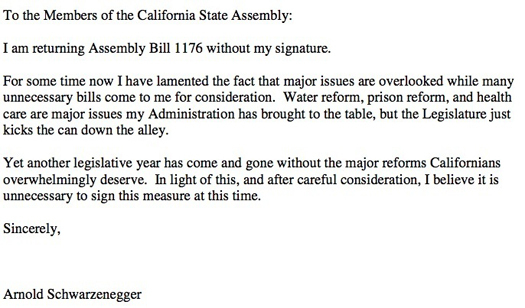
Real Executive Leadership


http://www.huffingtonpost.com/2009/10/27/schwarzenegger-sends-lawm_n_336319.html

Can you find the secret message?

Secret Messages

Tuesday, October 27, 2009

The Real TV President

Some say these are some of the best presidential speeches, too bad they're not real.

Although these clips are fictional and often improbable, they reflect the expectations of the presidency. Presidents play a role. FDR was never photographed in his wheel chair, Eisenhower cultivated an aloof public persona, JFK hid his feeble health, etc. As head of state, the symbolic role of the POTUS sometimes overshadows his actions as chief executive.

Monday, October 26, 2009

World War II Disney Propaganda

Presidential Rhetoric

Gettysburg:


The Second Inaugural

FDR's First Fireside chat ... on banking.

The Map Speech

FDR also made speeches for newsreels:


JFK Inaugural:


Carter's "Crisis of Confidence" Speech


Reagan's Evil Empire Speech:

Brief History of WhiteHouse.gov

President Clinton established WhiteHouse.gov in 1994. Since then, the website has changed dramatically from administration to administration.

Here's a little more information.

Here's a slideshow of the many faces of the website.

Sunday, October 25, 2009

President Obama in campaign mode in Florida

http://www.politico.com/news/stories/1009/28719.html

OFA takes over the DNC?

Earlier we talked about how the Obama for America campaign has retooled itself into Organizing for America. Yesterday, Politico published this article describing OFA's attempts to integrate itself with the DNC. It's an interesting merging between what some see as a reelection campaign and a committee that is supposed to serve the interests of the entire party, and apparently some party heavy-weights are unhappy with how blurry this line could get.

It makes for an interesting comparison with the Republican leadership, which often seems to be at odds with the RNC (or at least its mouthpiece, Chairman Michael Steele). I wonder how the blending of OFA and the DNC, if it happens, will influence the the Democratic Party in future elections.

But Vermont IS one of the 50 states

In the chapter we read last week, Pika and Maltese claim that it took George W. Bush only three years and two months to visit all 50 states as President. I was reminded then of numerous press accounts from the last months of Bush’s presidency wondering if he would finally visit Vermont, and have since done some research. According to the CBS reporter Pika and Maltese actually cite, President Bush never did visit the Green Mountain State. But what makes this mistake strange is that the newspaper article Pika and Maltese reference explicitly highlights their mistake and explains that it took President Bush six years and six months to make it to his 49th state, Rhode Island. Here’s the relevant section:

49 down, 1 to go

A speech by President Bush at the Naval War College last week marked the first visit to Rhode Island of his presidency. The trip left just one state that Bush has not visited as president: Vermont. Bush lost Vermont in both 2000 and 2004, so don't expect him to head there for Ben & Jerry's any time soon. According to Mark Knoller of CBS News, it took Bill Clinton until seven years and 11 months into his presidency to visit all 50 states, making it to Nebraska in December 2000. George H.W. Bush, on the other hand, hit all 50 states in three years and two months. Ronald Reagan never made it to all 50, according to Knoller – he visited 46.

Wednesday, October 21, 2009

Secret Service

http://www.boston.com/news/nation/washington/articles/2009/10/18/secret_service_under_strain_as_leaders_face_more_threats/

Public Opinion and the Public Presidency

John Pohoretz describes the reverential attitude with which popular culture once depicted the presidency:

George M. Cohan, the song-and-dance man, is invited to the Oval Office by Franklin D. Roosevelt. He is an old man, and thrilled beyond words to discover his president is a fan. FDR asks Cohan to tell him the story of his life, and thus begins Yankee Doodle Dandy, James Cagney's glorious 1942 musical.

The face of the actor who plays Roosevelt is obscured. We hear his voice, but he is photographed from the back, from the side, over his shoulder. The effect is to raise FDR's status to that of a divinity, the Hollywood equivalent of the Lord telling Moses: "Thou canst not see my face: for there shall no man see me, and live .  .  . thou shalt see my back parts: but my face shall not be seen."

Yankee Doodle Dandy clip here.

See a similar (1937) depiction here at 7:35.

Polarization under Bush and Obama (Gallup data on Bush and Obama)


Bill Clinton explains "crafted speech":

So what do I use polls for on the issues? What I primarily use polls for is to tell me how to make the argument that's most likely to persuade you that I'm right about what I'm trying to do. ... Okay. I'll give you an example where, according to the polls I have the unpopular position, okay? The Congress passes a repeal of the estate tax, an outright repeal. Now, I can--and I'm going to veto it if it comes to my desk, okay? Now, I can say the following. I can say, "I'm going to veto this because it only helps less than 2 percent of the people and half of the relief goes to one-tenth of one percent of the people, and it's an average $10 million." That is a populist explanation.

I can say, "I'm going to veto it because we only have so much money for tax cuts, and I think it's wrong to do this and say this is our highest priority, when we have done nothing to lower the income taxes of low-income working people with three kids or more or to help people pay for child care or long-term care for their elderly or disabled relatives or to get a tax deduction for college tuition."

Or I could say, "I think there should be estate tax relief." I do, by the way. "I don't care if it does help primarily upper income people. The way so many people have made so much money in the stock markets in the last 8 years, there are a lot of family-owned businesses that people would like to pass down to their family members, that would be burdened by the way the estate tax works, plus which the maximum rate is too high. When it was set, income tax rates were higher, but there was a lot of ways to get out of it. Now the rates are lower, but you have less ways to get out of it. You have to pretty much pay what you owe more." So I could say that.

So it's not fair to totally repeal it. Like even Bill Gates has said, "Why are you going to give me a $40 billion tax break." And he's going to give away his money, and I applaud him and honor him for it.

So I could make either of those three arguments. It's helpful to me to know what you're thinking. I know what I think is right. I'm not going to change what I think is right. But in order to continue to be effective, you have to believe I'm right. So that's kind of what I use polls for.


Thursday, October 15, 2009

Second Essay Assignment


Pick one of the following:

1. Write a Saturday radio address for President Obama. (You may find past addresses at http://www.whitehouse.gov/weekly_address/). The address itself should take two pages. Then write a two-page essay explaining what you are trying to do in the address. What message are you sending to what audience for what intended effect?

2. Look at various schemes for rating presidents (e.g., Pika 149-150 and http://www.opinionjournal.com/extra/?id=110007243). Identify a president about whom at least two of the ratings disagree strongly. Explain why this president’s performance gets such divergent grades. That is, what did this president do to trigger such different reactions from different raters?

3. You have a time machine and the opportunity to advise Barack Obama or John McCain on one campaign decision. What should he do differently, and why?

4. Subject to my approval, write a four-page essay on any relevant topic of your choice.


Essays should be typed (12-point), stapled, double-spaced, and no more than four pages long. I will not read past the fourth page.

If you pick the second option, please provide me with a way to read the speech or article. If it is on the Internet, include the URL in your references. If it is available only on dead tree, please attach a photocopy, which will not count against the page limit.

Put your name on a cover sheet. Do not identify yourself on the text pages.

Cite your sources. You may use either endnotes or parenthetical references to a bibliography. In either case, put your documentation in a standard format (e.g., Turabian or Chicago Manual of Style).

Watch your spelling, grammar, diction, and punctuation. Errors will count against you.

Return essays by the start of class, Wednesday 28 October. Essays will drop one gradepoint for one day's lateness and a full grade after that. I will grant no extensions except for illness or emergency.

Wednesday, October 14, 2009

Washington State Voting Changes Post Election of 2000

Washington State had its own controversial election in 2004 where Dino Rossi was announced the winner with 261 more votes than Democratic challenger Christine Gregoire. According to Washington State Law, a mandatory machine recount is done if the candidates differ in margin by 150 to 2,000 votes and a mandatory manual recount is done if the difference is less than 150 votes. After this recount, the gap narrowed to a 42 vote difference. After the manual recount the decision was REVERSED. Gregoire took a 133 vote lead and Rossi did not want to challenge further. These new recounts included ballots that were previously thrown out and recently "found" ballots in places like mail bags or inside envelopes.

The problems faced in our Gubernatorial election were met with serious election reform and overhaul. With the help of HAVA funding, the Washington State Secretary of State's Office is now on the cutting edge of election reform with things like:

Online Voter Registration Database

Statewide Guidelines for What Counts as a Vote

Only Absentee Voting Statewide (with the exception of one county)

and hopefully in the future Overseas Military Voting Via Internet


Just a quick plug for my home state that rarely gets national political attention.

The Electoral Process

From Federalist 39:
The executive power will be derived from a very compound source. The immediate election of the President is to be made by the States in their political characters. The votes allotted to them are in a compound ratio, which considers them partly as distinct and coequal societies, partly as unequal members of the same society. The eventual election, again, is to be made by that branch of the legislature which consists of the national representatives; but in this particular act they are to be thrown into the form of individual delegations, from so many distinct and coequal bodies politic. From this aspect of the government it appears to be of a mixed character, presenting at least as many federal as national features.

Friday, October 9, 2009

On Nominations

Nate Silver just wrote a piece about possible reforms coming to the nomination process of the Democratic Presidential candidate. The article is an interesting read, so if you have a few minutes check it out. He also compiled a very interesting table:


Hope everyone has a good weekend.

Writing

President Obama Wins Nobel Peace Prize

This is already making for a great debate...

KARL RITTER and MATT MOORE, Associated Press Writers – 57 mins ago
OSLO – President Barack Obama won the 2009 Nobel Peace Prize on Friday in a stunning decision designed to build momentum behind his initiatives to reduce nuclear arms, ease tensions with the Muslim world and stress diplomacy and cooperation rather than unilateralism.
Obama said he was surprised and deeply humbled by the honor, and planned to travel to Oslo to accept the prize, which he said he does not see "as a recognition of my own accomplishments," but rather as a recognition of goals he has set for the United States and the world.
"I do not feel that I deserve to be in the company of so many transformative figures that have been honored by this prize," Obama said.
Many observers were shocked by the unexpected choice so early in the Obama presidency, which began less than two weeks before the Feb. 1 nomination deadline and has yet to yield concrete achievements in peacemaking.
Some around the world objected to the choice of Obama, who still oversees wars in Iraq and Afghanistan and has launched deadly counter-terror strikes in Pakistan and Somalia.
Members of the Norwegian Nobel Committee said their choice could be seen as an early vote of confidence in Obama intended to build global support for his policies. They lauded the change in global mood wrought by Obama's calls for peace and cooperation, and praised his pledges to reduce the world stock of nuclear arms, ease American conflicts with Muslim nations and strengthen the U.S. role in combating climate change.
Aagot Valle, a lawmaker for the Socialist Left party who joined the committee this year, said she hoped the selection would be viewed as "support and a commitment for Obama."
"And I hope it will be an inspiration for all those that work with nuclear disarmament and disarmament," she told The Associated Press in a rare interview. Members of the Nobel peace committee usually speak only through its chairman.
The peace prize was created partly to encourage ongoing peace efforts but Obama's efforts are at far earlier stages than past winners'. The Nobel committee acknowledged that they may not bear fruit at all.
"He got the prize because he has been able to change the international climate," Nobel Committee chairman Thorbjoern Jagland said. "Some people say, and I understand it, isn't it premature? Too early? Well, I'd say then that it could be too late to respond three years from now. It is now that we have the opportunity to respond — all of us."
After the prize was announced, Jagland compared the decision to give it to Obama to the prize was given to German Chancellor Willy Brandt in 1971 for his "Ostpolitik" policy of trying to find common ground with Eastern Europe, which was under Communist sway.
He said the same thing was true when then-Soviet leader Mikhail Gorbachev got the prize in 1990 after he had launched perestroika and glasnost, and allowed Eastern Europe to emerge from Kremlin control.
The selection to some extent reflects a trans-Atlantic divergence on Obama. In Europe and much of the world he is lionized for bringing the United States closer to mainstream global thinking on issues like climate change and multilateralism. At home, the picture is more complicated. As president, Obama is often criticized as he attempts to carry out his agenda — drawing fire over a host of issues from government spending to health care to the conduct of the war in Afghanistan.
U.S. Republican Party Chairman Michael Steele contended that Obama won the prize as a result of his "star power" rather than meaningful accomplishments.
"The real question Americans are asking is, What has President Obama actually accomplished?" Steele said.
Obama's election and foreign policy moves caused a dramatic improvement in the image of the U.S. around the world. A 25-nation poll of 27,000 people released in July by the Pew Global Attitudes Project found double-digit boosts to the percentage of people viewing the U.S. favorably in countries around the world. That indicator had plunged across the world under President George W. Bush.
Asked whether the prize could be seen as praising Obama's reversal of Bush administration policies, Inger-Marie Ytterhorn, a senior political adviser to the right-wing populist Progress Party told the AP that: "I guess you could read it like that."
French President Nicolas Sarkozy, who has made no secret of his admiration for Obama, called the decision the embodiment of the "return of America into the hearts of the people of the world."
But Obama's work is far from done, on numerous fronts.
He said he would end the Iraq war but has been slow to bring the troops home and the real end of the U.S. military presence there won't come until at least 2012.
He's running a second war in the Muslim world, in Afghanistan — and is seriously considering ramping up the number of U.S. troops on the ground and asking for help from others, too.
"I don't think Obama deserves this. I don't know who's making all these decisions. The prize should go to someone who has done something for peace and humanity," said Ahmad Shabir, 18-year-old student in Kabul. "Since he is the president, I don't see any change in U.S. strategy in the wars in Iraq and Afghanistan."
Obama has said that battling climate change is a priority. But the U.S. seems likely to head into crucial international negotiations set for Copenhagen in December with Obama-backed legislation still stalled in Congress.
Former Polish President Lech Walesa, who won the prize in 1983, questioned whether Obama deserved it now.
"So soon? Too early. He has no contribution so far. He is still at an early stage. He is only beginning to act," Walesa said.
"This is probably an encouragement for him to act. Let's see if he perseveres. Let's give him time to act," Walesa said.
Unlike the other Nobel Prizes, which are awarded by Swedish institutions, the peace prize is given out by a five-member committee elected by the Norwegian Parliament. Like the Parliament, the committee has a leftist slant, with three members elected by left-of-center parties. Jagland said the decision to honor Obama was unanimous.
The award appeared to be at least partly a slap at Bush from a committee that harshly criticized Obama's predecessor for his largely unilateral military action in the wake of the Sept. 11 terror attacks.
"Those who were in support of Bush in his belief in war solving problems, on rearmament, and that nuclear weapons play an important role ... probably won't be happy," said Valle, the Nobel Committee member.
The Nobel committee praised Obama's creation of "a new climate in international politics" and said he had returned multilateral diplomacy and institutions like the U.N. to the center of the world stage.
"You have to remember that the world has been in a pretty dangerous phase," Jagland said. "And anybody who can contribute to getting the world out of this situation deserves a Nobel Peace Prize."
Until seconds before the award, speculation had focused on a wide variety of candidates besides Obama: Zimbabwe's Prime Minister Morgan Tsvangirai, a Colombian senator, a Chinese dissident and an Afghan woman's rights activist, among others. The Nobel committee received a record 205 nominations for this year's prize, though it was not immediately apparent who nominated Obama.
Obama is the third sitting U.S. president to win the award: President Theodore Roosevelt won in 1906 and President Woodrow Wilson was awarded the prize in 1919.
Wilson received the prize for his role in founding the League of Nations, the hopeful but ultimately failed precursor to the contemporary United Nations.
The Nobel committee chairman said after awarding the 2002 prize to former Democratic President Jimmy Carter, for his mediation in international conflicts, that it should be seen as a "kick in the leg" to the Bush administration's hard line in the buildup to the Iraq war.
Five years later, the committee honored Bush's adversary in the 2000 presidential election, Al Gore, for his campaign to raise awareness about global warming.
In July talks in Moscow, Obama and Russian President Dmitry Medvedev agreed that their negotiators would work out a new limit on delivery vehicles for nuclear warheads of between 500 and 1,100. They also agreed that warhead limits would be reduced from the current range of 1,700-2,200 to as low as 1,500. The United States now has about 2,200 such warheads, compared to about 2,800 for the Russians.
But there has been no word on whether either side has started to act on the reductions.
Former Peace Prize winner Mohamed ElBaradei, director general of the International Atomic Energy Agency in Vienna, said Obama has already provided outstanding leadership in the effort to prevent nuclear proliferation.
"In less than a year in office, he has transformed the way we look at ourselves and the world we live in and rekindled hope for a world at peace with itself," ElBaradei said. "He has shown an unshakable commitment to diplomacy, mutual respect and dialogue as the best means of resolving conflicts."
Obama also has attempted to restart stalled talks between the Israelis and Palestinians, but just a day after Obama hosted the Israeli and Palestinian leaders in New York, Israeli officials boasted that they had fended off U.S. pressure to halt settlement construction. Moderate Palestinians said they felt undermined by Obama's failure to back up his demand for a freeze.
Obama was to meet with his top advisers on the Afghan war on Friday to consider a request by Gen. Stanley McChrystal, the U.S. commander in Afghanistan, to send as many as 40,000 more troops to Afghanistan as the U.S war there enters its ninth year.
Obama ordered 21,000 additional troops to Afghanistan earlier this year and has continued the use of unmanned drones for attacks on militants in Afghanistan and Pakistan, a strategy devised by the Bush administration. The attacks often kill or injure civilians living in the area.
Nominators for the prize include former laureates; current and former members of the committee and their staff; members of national governments and legislatures; university professors of law, theology, social sciences, history and philosophy; leaders of peace research and foreign affairs institutes; and members of international courts of law.
In his 1895 will, Alfred Nobel stipulated that the peace prize should go "to the person who shall have done the most or the best work for fraternity between the nations and the abolition or reduction of standing armies and the formation and spreading of peace congresses."
The committee has taken a wide interpretation of Nobel's guidelines, expanding the prize beyond peace mediation to include efforts to combat poverty, disease and climate change.
___
Associated Press writers Ian MacDougall in Oslo, Rahim Faiez in Kabul, Celean Jacobson in Johannesburg, George Jahn in Vienna, Monika Scislowska in Warsaw, Poland, Matti Huuhtanen in Helsinki and Jennifer Loven in Washington contributed to this report.

Wednesday, October 7, 2009

The Nomination Process & 2008

The best ad of 2008:


Fred Thompson did not set the race on fire.

Democratic demographics helped explain Obama's advantage.

So did the issue of change v. experience.

Hillary Clinton had certain key assumptions.

Obama built a huge fundraising advantage.

Obama emerges


The speech led to a certain music video. Ten million views so far:


HRC tears up during NH campaign stop


Fox News "helpfully" compiled Jeremiah Wright's greatest hits:


The 3 AM ad:


HRC's Bosnia problem


The bitter clingers:


So long, Tim

Tuesday, October 6, 2009

Scots-Irish

Cameron Joseph `08 has a perceptive analysis of the Scots-Irish vote at The Atlantic:

The populist fury aimed at President Obama and his fellow Democrats may have roots much deeper than health care. In fact, it may be that it can be traced back to the emigration of the Scots-Irish, the first white group to settle interior America.They've been called rednecks, hillbillies and crackers. In the modern parlance of political correctness, they've been referred to as the Bubba vote. They live in Sarah Palin's "real America," and they make up the majority of Reagan Democrats. They count as distant relatives at least twelve U.S. presidents, from Andrew Jackson to Teddy Roosevelt and Ronald Reagan to Bill Clinton and even to Barack Obama, yet the Scots-Irish remain largely ignored as an ethnic group in America
.

Monday, October 5, 2009

Questions and Answers

Here are some answers to recent questions that have come up in class:

1. Milkis and Nelson are not quite accurate when they speak of "a signficiant reduction in domestic spending" under Reagan (p. 370). In constant FY2000 dollars, there was a drop in nondefense discretionary spending, from $282.1 billion in FY81 to $255.3 billion in FY89. But more than offsetting this change were large increases in other areas of domestic spending:

...............................FY81......FY89
Social Security.......$246b....$300b
Means-Tested
Entitlements (for
the needy)..............$93b.......$111b

2. Here is the formula for the Major Party Index (MPI): ((Most recent 2-Party Republican Presidential Vote)*0.25) + ((Average of the Two Most Recent Republican 2-Party Votes for the U.S. Senate)*0.125) + ((Republican 2- Party Percent of all U.S. House Votes)*0.125) + ((Most Recent 2-Party Republican Vote for Governor)*0.25) + ((2-Party Republican Percentage of Seats in the State Senate)*0.125) + ((2-Party Republican Percentage of Seats in the State House)*0.125). More detail here.

3. In 1976, the first year for which we have FEC data, all presidential candidates in both parties raised a total of $171 million in the primary and general election campaigns. That amount equals $647 million in 2008 dollars (CPI). The latest figures show that Barack Obama raised $656 million in 2008. In other words, he raised more money than all of the 1976 candidates put together.

More Gallup Polls

During today's examination of party identification I remembered Nate Silver's piece about coming of age during different Presidential administrations.

Mr. Silver argues:

What's interesting, though, is what happens when we look at not these abstract generational categories, but rather at the following question: who was President when you turned 18? As annotated in the chart below, the popularity -- or lack thereof -- of the President when the voter turned 18 would seem to have a lot of explanatory power for how their politics turned out later on.


The Context of the 2008 Election

Trend in Party Identification

The "Time for a Change" Model.

ICK:
Epic Journey links